
Doberman Pinscher Breed Guide: Temperament, Health and Family Fit
Written by the 4 Legged Pets team · Updated October 22, 2026
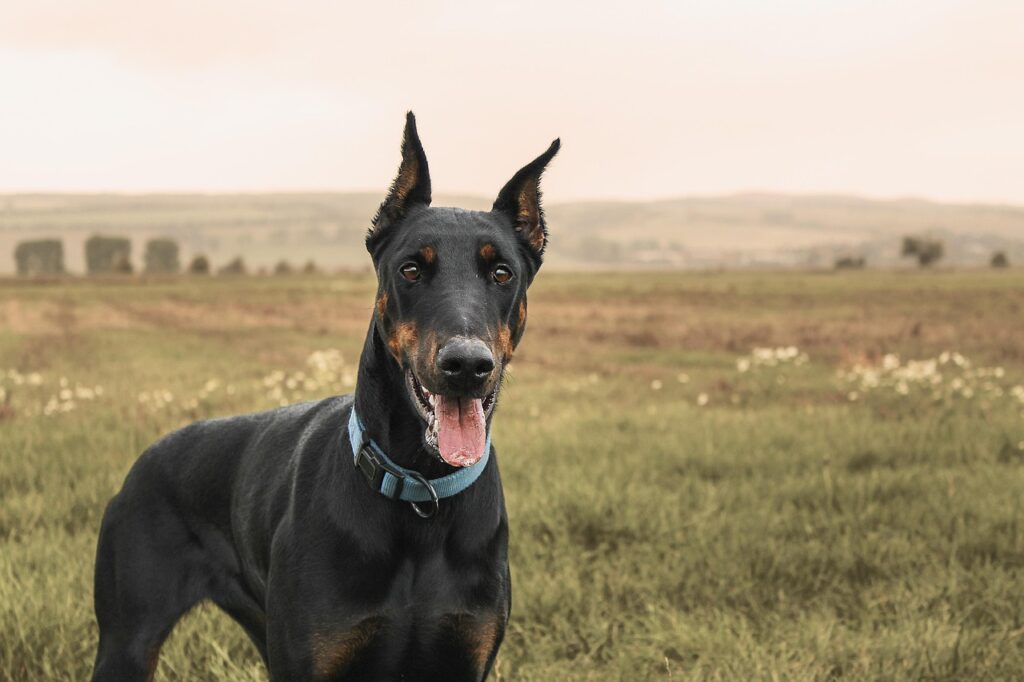
Around 1890, in the town of Apolda in Germany, a tax collector named Karl Friedrich Louis Dobermann went to work in neighborhoods where a man carrying cash was a target. He also ran the local dog pound, which gave him something nobody else had: first pick of strong, loyal, sharp dogs to breed from. What he wanted was one dog that could guard him on the road, stay devoted to his family, and think for itself when it mattered.
He only got a few years to see the result. Karl Dobermann died in 1894, and the breeders who carried the work forward kept his name on the breed in his honor. In Germany the dog is simply called the Dobermann. In America it picked up a second word, and here it is the Doberman Pinscher.
Nobody knows the full recipe. Most experts believe the Rottweiler, the German Pinscher, the Beauceron, the Weimaraner, the Manchester Terrier and the Greyhound all had a hand in it. That mix explains the dog you see today: an athlete’s body, a guard dog’s nerve, and enough brains to know when to use each one.
And if a Dobermann is already part of your family, our guide to pet insurance for dogs is worth a read. Now, the breed itself.
Quick facts
| Height | Males 26–28 inches, females 24–26 inches |
| Weight | Males 75–100 pounds, females 60–90 pounds |
| Lifespan | 10–12 years |
| Coat | Short and smooth, sheds lightly year-round |
| Colors | Black and rust, red and rust, blue, fawn |
| Energy level | High, needs real exercise every day |
| Good with kids | Yes, with training and supervision |
Temperament
A Doberman is a people dog. It will follow you from room to room, lean against your leg, and keep one ear open for the door all night. Owners call them velcro dogs and they mean it as a compliment.
This is one of the smartest breeds there is, and it learns fast, sometimes faster than you want. That intelligence cuts both ways: a trained Doberman is obedient, attentive and calm, while a bored one finds its own job, and you won’t like the job it picks. Training and early socialization are not optional with this breed, they are the whole game.
With strangers, a Doberman is naturally reserved. It will watch a newcomer before it decides about them. That is a feature if you want a watchdog, and it is exactly why socialization matters: a Doberman that has met plenty of people, dogs and places learns the difference between a guest and a threat.
Pros and cons
Pros
- Fiercely loyal to its family, one of the most devoted breeds there is
- Smart and eager to train, one of the easiest large breeds to work with
- Natural watchdog without being yappy
- Short coat, minimal grooming, low doggy odor
Cons
- Needs an hour or more of real exercise every day, not a walk around the block
- Big and strong, so it needs a consistent owner, not a pushover
- Serious health risks run in the breed, heart problems above all
- Hates being left alone for long stretches
- Reserved with strangers, so socialization has to start early
Are Dobermans good with kids?
Yes, with two conditions. A raised, trained Doberman is famously gentle with its own people and patient with the kids it grows up beside. It is protective without being unstable, and it bonds to the whole family, not just one person.
The conditions: everything above about training and exercise, and size. This is an 80-pound dog with the enthusiasm of a puppy, and around toddlers that combination needs supervision, the same way you would supervise any big dog around a two-year-old. Families with school-age kids and an active lifestyle are the sweet spot for this breed.
Doberman health issues
Dobermans live 10 to 12 years, and most are healthy for most of that time. But this breed carries some serious risks, and anyone bringing one home should know them going in.
Dilated cardiomyopathy (DCM). This is the big one, and it is the disease most tied to this breed. The heart muscle stretches and weakens until it can’t pump well. It tends to show up in middle age, and it can start quietly. The defense is screening: regular heart checks from your vet, and if you’re buying a puppy, heart test results on both parents.
Von Willebrand’s disease. A bleeding disorder, the most common one in dogs, and Dobermans are on the short list of breeds that carry it. Blood that doesn’t clot properly matters most during surgery or after an injury. A simple DNA test tells you where your dog stands.
Wobbler syndrome. A condition of the neck vertebrae that squeezes the spinal cord, showing up as a wobbly, unsteady walk, usually in middle age. It needs a vet workup the moment you see it.
Bloat. Deep-chested breeds like the Doberman can twist a stomach, and it is an emergency. Two habits lower the risk: feed smaller meals and slow the eating down with a slow feeder bowl, and keep the hard exercise away from mealtimes.
The smaller stuff. Hypothyroidism shows up more in this breed than average. And in the blue and fawn coats, the dilution gene that makes that color also thins the hair, a condition called color dilution alopecia. If you love the blue look, ask the breeder about it and be ready for skin care.
One more thing worth doing from day one: give a big dog a real bed. Their joints carry them for a decade, and a good orthopedic dog bed is the cheapest joint care there is.
Grooming and exercise
The coat is the easy part: short, smooth, and a once-over with a brush once a week catches most of the shedding. Trim the nails, brush the teeth, done.
The exercise is not the easy part. This breed was built to work. It needs an hour to two hours a day, and it thrives on having a job, whether that is running with you, advanced obedience, or serious fetch. A tired Doberman is a good Doberman. A bored one is a demolition project.
The verdict
A Doberman is not a starter dog. It is a full-time partnership for a family that trains, exercises and includes its dog in everything. Get that part right and very few breeds give this much back: a protector that thinks, a companion that worships its people, and a dog that makes you feel safe in your own house.
I’ve had Dobermans in my own family for years, and I can tell you the loyalty you hear about is real. That part of the reputation is exactly as advertised.